Heritage, Facade & Graffiti Cleaning with Dry Ice

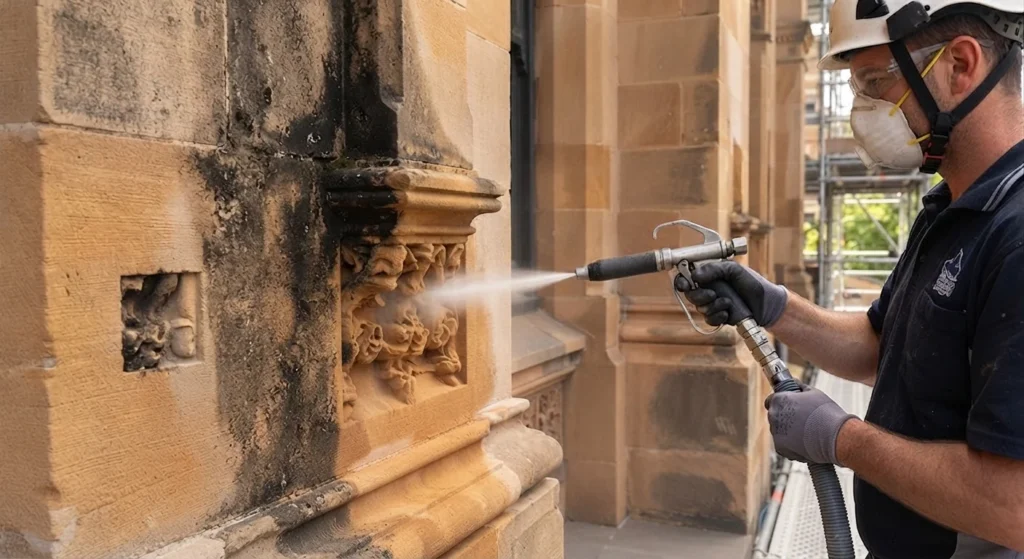
Heritage and architectural surfaces can’t take abrasive blasting — sand and garnet permanently erode soft brick, stone, render and timber. Dry ice cleans them without touching the substrate. It lifts paint, soot, grime, organic growth and graffiti through thermal shock and impact rather than abrasion, so the surface underneath is left intact. There’s no water to soak into porous masonry and no grit to clean up afterwards. It’s the method conservators reach for when the surface is the thing worth protecting.

Why heritage work specifies dry ice

Non-abrasive cleaning is often a condition of heritage and conservation work precisely because it doesn’t alter the original surface. Dry ice has been used in building conservation across Australia and internationally to clean facades, timber and stone without erosion. For sensitive or listed properties, we can provide a test patch before committing to the full area.

What we clean

Heritage brick, stone and sandstone

Render, terracotta and masonry

Painted-over signage and graffiti

Architectural and structural timber

Statues, monuments and memorials

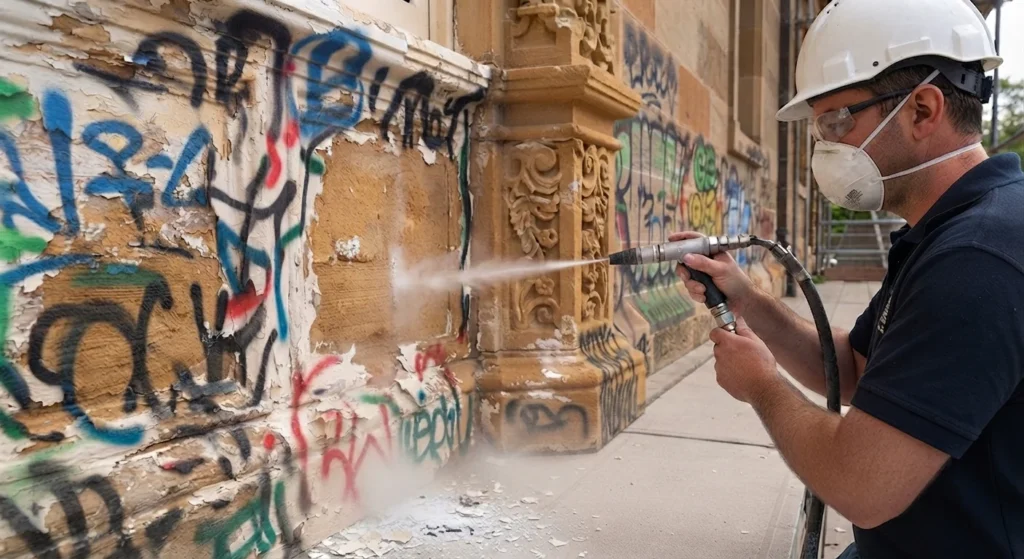
Graffiti and paint removal

Dry ice removes spray paint and coatings from brick, concrete and render without the scarring that pressure washing or sandblasting leaves behind. Because it’s dry and non-abrasive, it’s well suited to repeat graffiti hot-spots and to painted-over heritage detail that needs to be recovered rather than ground away. Settings are tuned to the surface so the coating comes off and the substrate stays.

FAQ - Straight answers, no sales fog

Will it damage soft heritage brick?
No — it’s non-abrasive, which is why it’s specified for heritage surfaces. We test first on sensitive substrates.
Yes, with settings tuned to the surface to avoid scarring.
Yes — we can clean a small area first so you can approve the result.

Contact us now

Mobile across Melbourne and Victoria. We come to you, wherever the job is.
Get a free evaluation or Directly call us.