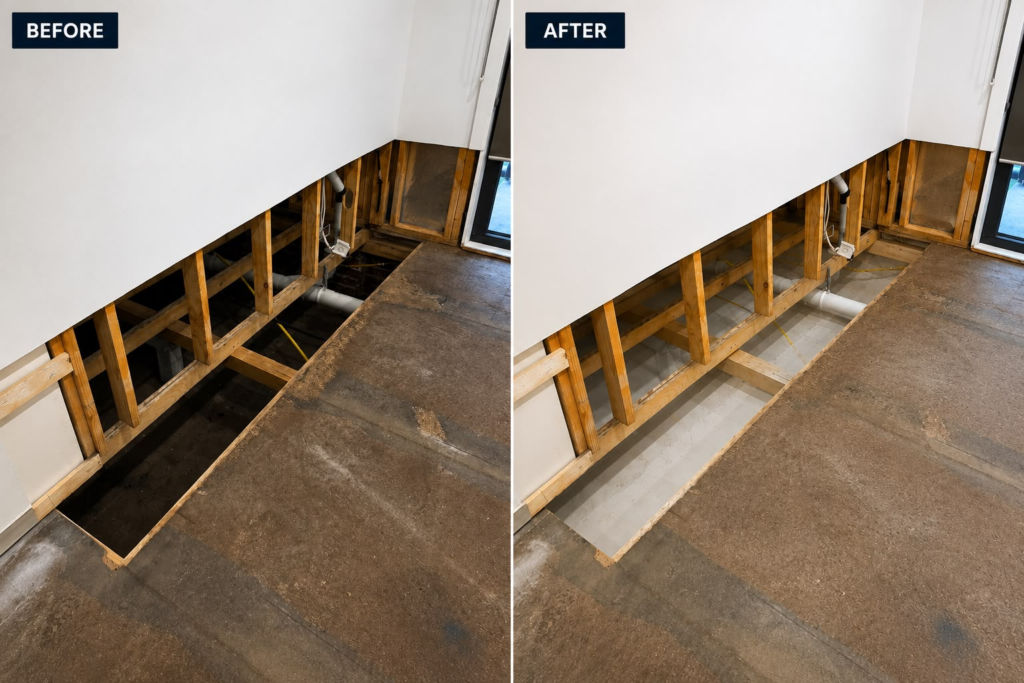
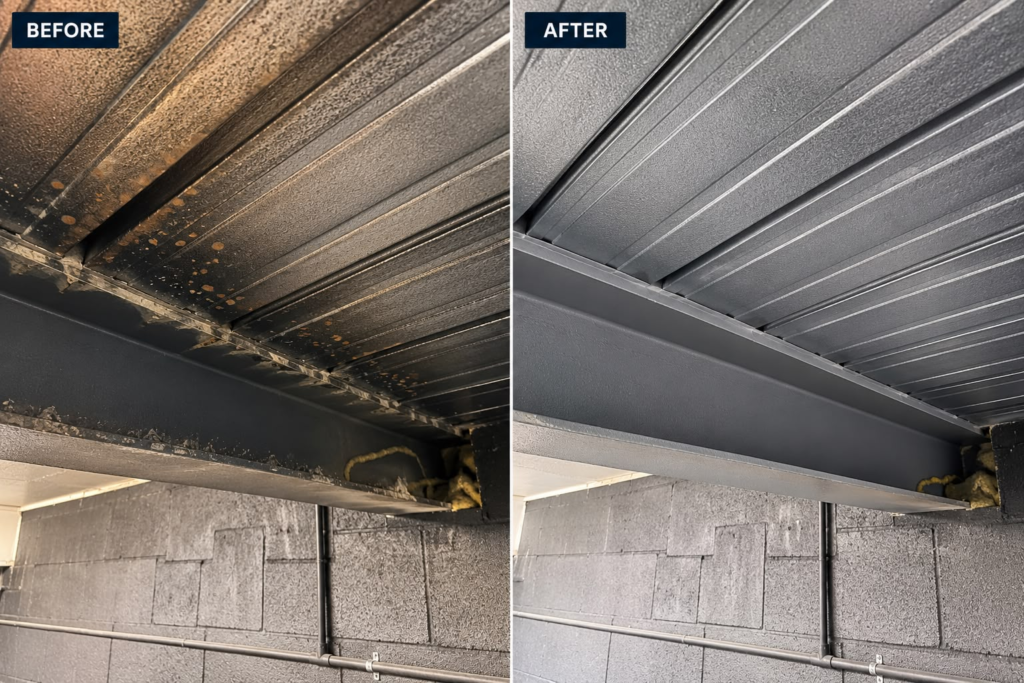
Searching for dry ice blasting Melbourne services you can trust? Total Dry Ice Blasting is a Melbourne-based specialist in non-abrasive CO₂ cleaning for industrial and restoration work. Our mobile units come to your site, so machinery stays in place and your operation gets back online faster. Dry ice lifts contamination without water, chemicals or blasting grit — the only waste left behind is the dirt itself. From food plants and switchboards to fire-damaged roof timbers, we clean surfaces that can’t tolerate conventional methods. Call 1300 798 726 to discuss your application or arrange a demonstration.
How dry ice works
Solid CO₂ hits at −78.5°C, then disappears
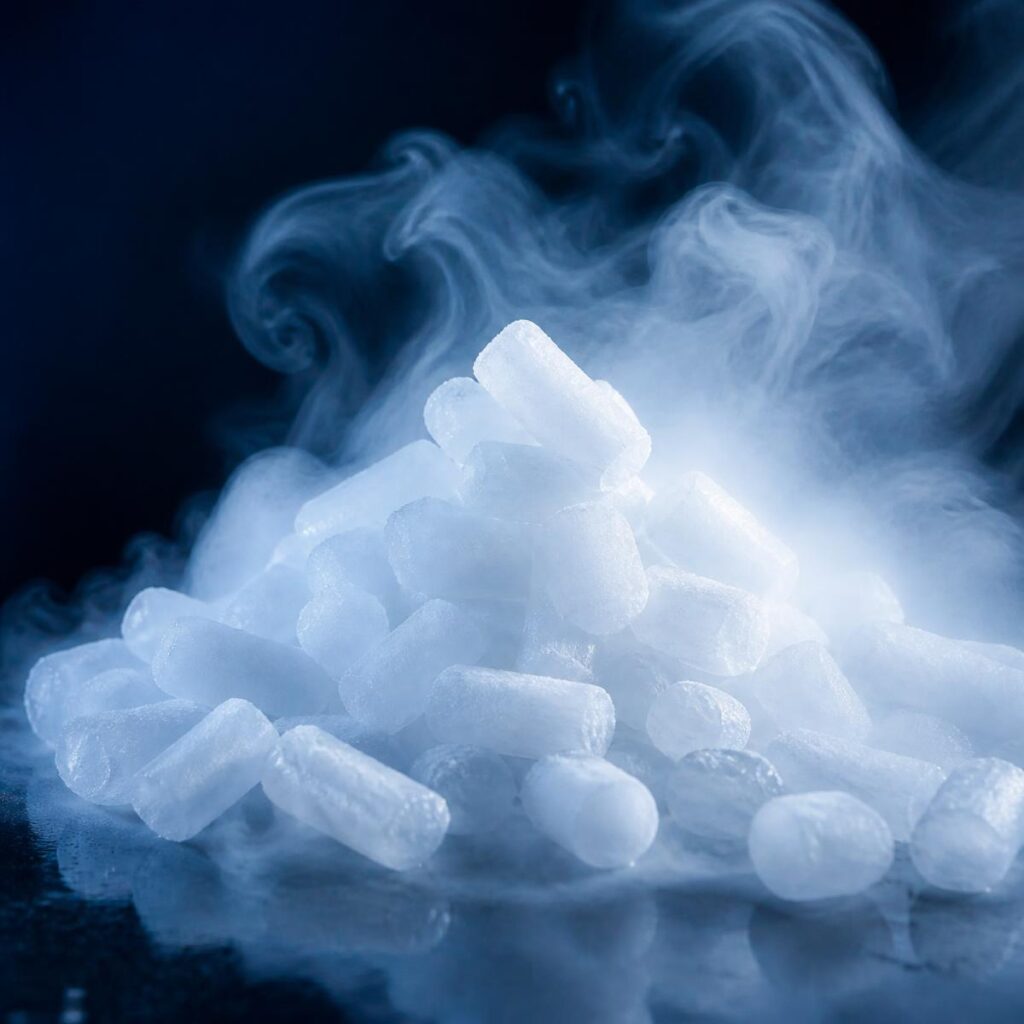
The method uses solid CO₂ pellets fired at high velocity by compressed air. Three things happen at once on impact. First, kinetic energy breaks the bond between the contaminant and the surface. Second, thermal shock — the pellets are −78.5°C — makes the contaminant contract and lose grip, which is especially effective on soot, bitumen, resin and thick paint. Third, the pellet flashes from solid straight to gas and expands around 800 times, lifting the debris clear. There’s no media residue and no moisture, so equipment is dry and ready to run immediately.
−78.5°C
Pellet temperature
800×
Gas expansion
0 ppm
Chemical residue
Services
What We Clean
Fire & soot restoration
Industrial machinery
Food & beverage equipment
Electrical & switchboards
Mould remediation
Heritage & facades
Why dry ice
Why dry ice over sandblasting or pressure washing
01
Non-abrasive
safe on aluminium, steel, fibreglass, rubber and plastics, with no erosion of the surface.
02
Non-conductive
safe around switchgear, motors and control panels where water can't go.
03
No secondary waste
The pellets sublimate on impact, so there's nothing to contain or dispose of but the contaminant.
04
No drying time
surfaces are left dry and ready for inspection, coating or return to service.
Where we operate
Mobile across Melbourne & Victoria
We bring the equipment to you. Whether it’s a maintenance shutdown, a food-safety clean or a fire-damaged property, our technicians work to your site protocols and compliance requirements and leave documentation behind. Based in Brooklyn, we service metropolitan Melbourne and regional Victoria.
Field results
Real jobs, Real results
Case studies
We’re currently gathering documented case studies from recent jobs — check back soon, or ask us directly for examples relevant to your industry.
Reviews
Environmentally responsible
Reclaimed CO₂. No secondary waste stream.
Our pellets are made from carbon dioxide captured as a byproduct of existing industrial processes — nothing new is released into the atmosphere. The media sublimates on impact, so there is no spent grit to haul, no wastewater to treat, and no solvent to dispose of.
Reclaimed
CO₂ source
No runoff
Zero wastewater
Non-toxic
Safe for crews
FAQ
Straight answers, no sales fog
Still unsure whether your application is a fit? Send us photos and we’ll tell you honestly.
Is dry ice blasting safe for electrical equipment?
CO₂ is non-conductive, so it’s one of the safest methods for switchgear, motors and control panels. A risk assessment is done before any work on energised equipment.
Does it leave any residue?
No media residue and no moisture. The pellets turn to gas on impact; the only thing left is the removed contaminant, which is swept or vacuumed away.
How does it compare to sandblasting?
Dry ice is non-abrasive and leaves no blasting media behind, so it cleans sensitive surfaces sand would damage — with no grit to clean up.
Contact us now
Mobile across Melbourne and Victoria. We come to you, wherever the job is. Get a free evaluation or Directly call us.