Food-Grade Dry Ice Cleaning for Melbourne Food & Beverage Plants

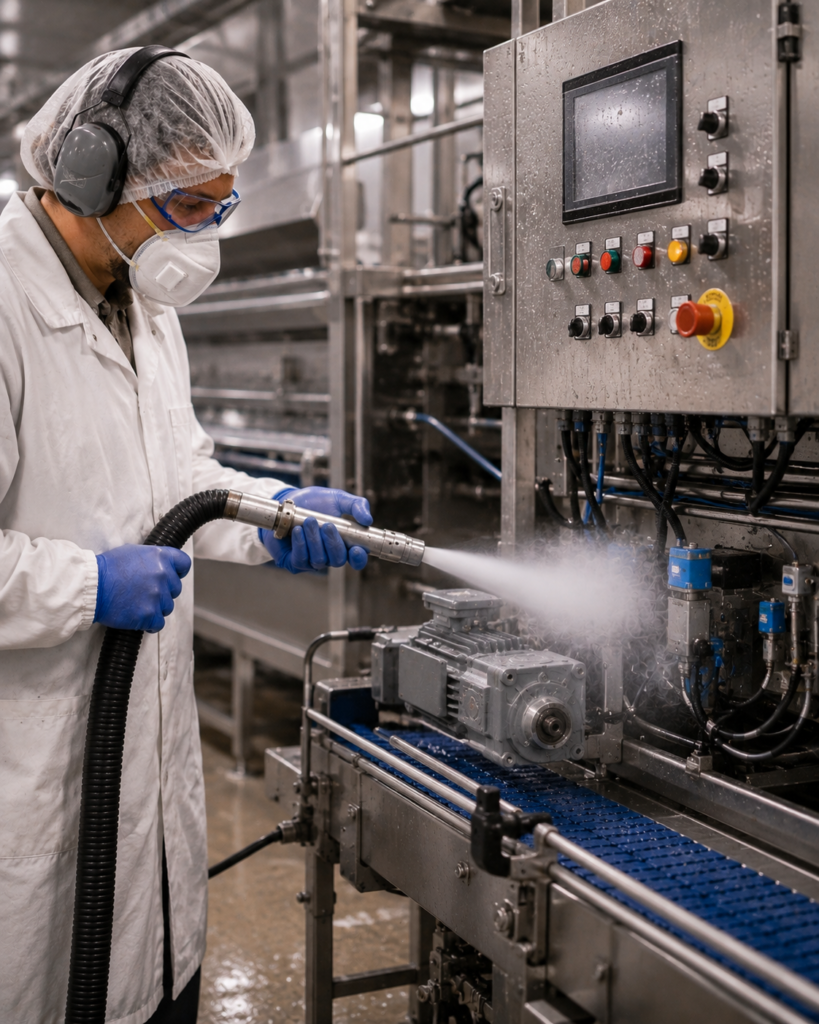
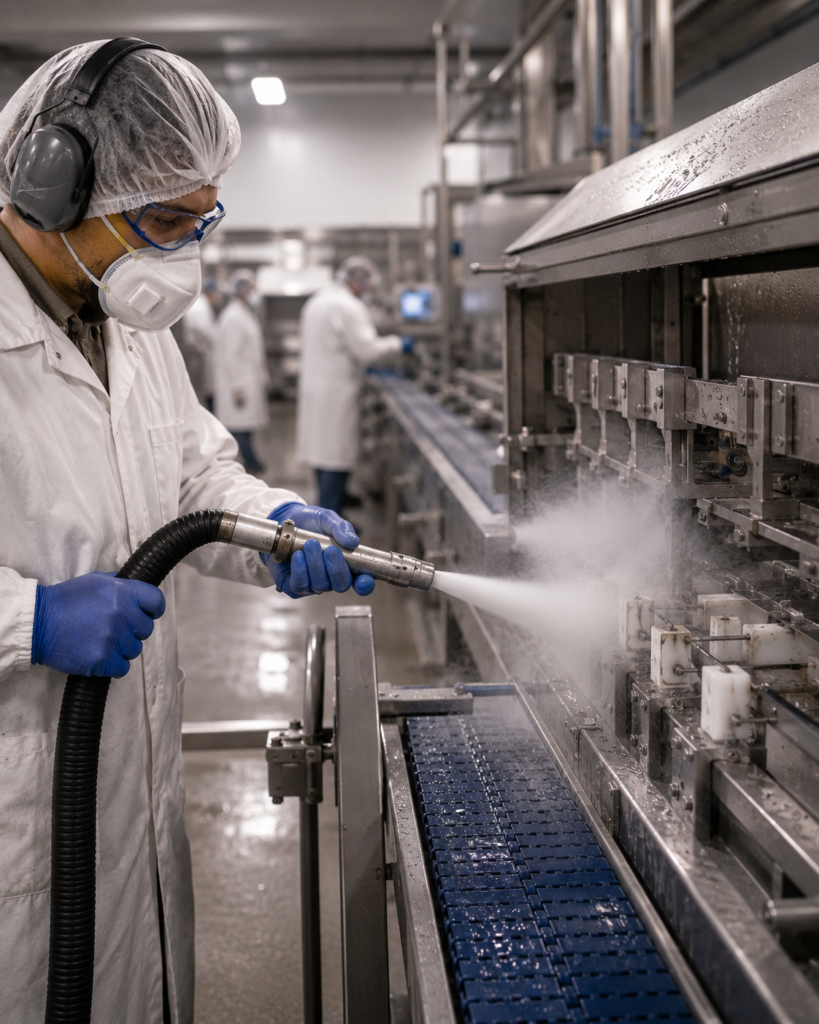
In a food or beverage facility, cleaning can’t introduce a new contamination risk. Dry ice blasting uses food-grade CO₂ and leaves no chemical residue and no moisture — the two things wet and chemical cleaning can’t avoid. It cleans conveyors, mixers, ovens and cold-room surfaces to a hygienic standard without soaking electricals or leaving films behind. Because it works in place, you avoid the teardown-and-reassembly time that eats into production, and equipment returns to service dry. It supports HACCP-based cleaning programmes and audit requirements.

Why food plants choose dry ice

CO₂ is a food-grade gas, so the media itself introduces no chemical contamination. There’s no water to pool in seams or feed microbial growth, and no abrasive grit to find its way into product. Cleaning happens in place and without disassembly, which shortens changeovers and reduces the labour tied up in manual scrubbing. The process is documented, so it slots into your existing food-safety and audit records.

Where it’s used in food production

Conveyor lines and belts

Mixers, blenders and hoppers

Cold-room panels and seals

Bakery and confectionery tooling

Ovens, smokers and roasters

Slicers and packaging equipment

Around electricals and controls

Food equipment is full of motors, sensors and control panels. Dry ice is non-conductive, so it cleans around energised and sensitive components in ways pressure washing simply can’t — after the appropriate risk assessment.

FAQ - Straight answers, no sales fog

Is dry ice cleaning HACCP compliant?

It supports HACCP-based programmes: food-grade media, no chemical residue, no added moisture, and documented results.

No — settings are tuned to the surface, and the process is non-abrasive.

Yes. In-place cleaning in a non-operational window is exactly where dry ice fits best.

Contact us now

Mobile across Melbourne and Victoria. We come to you, wherever the job is.
Get a free evaluation or Directly call us.